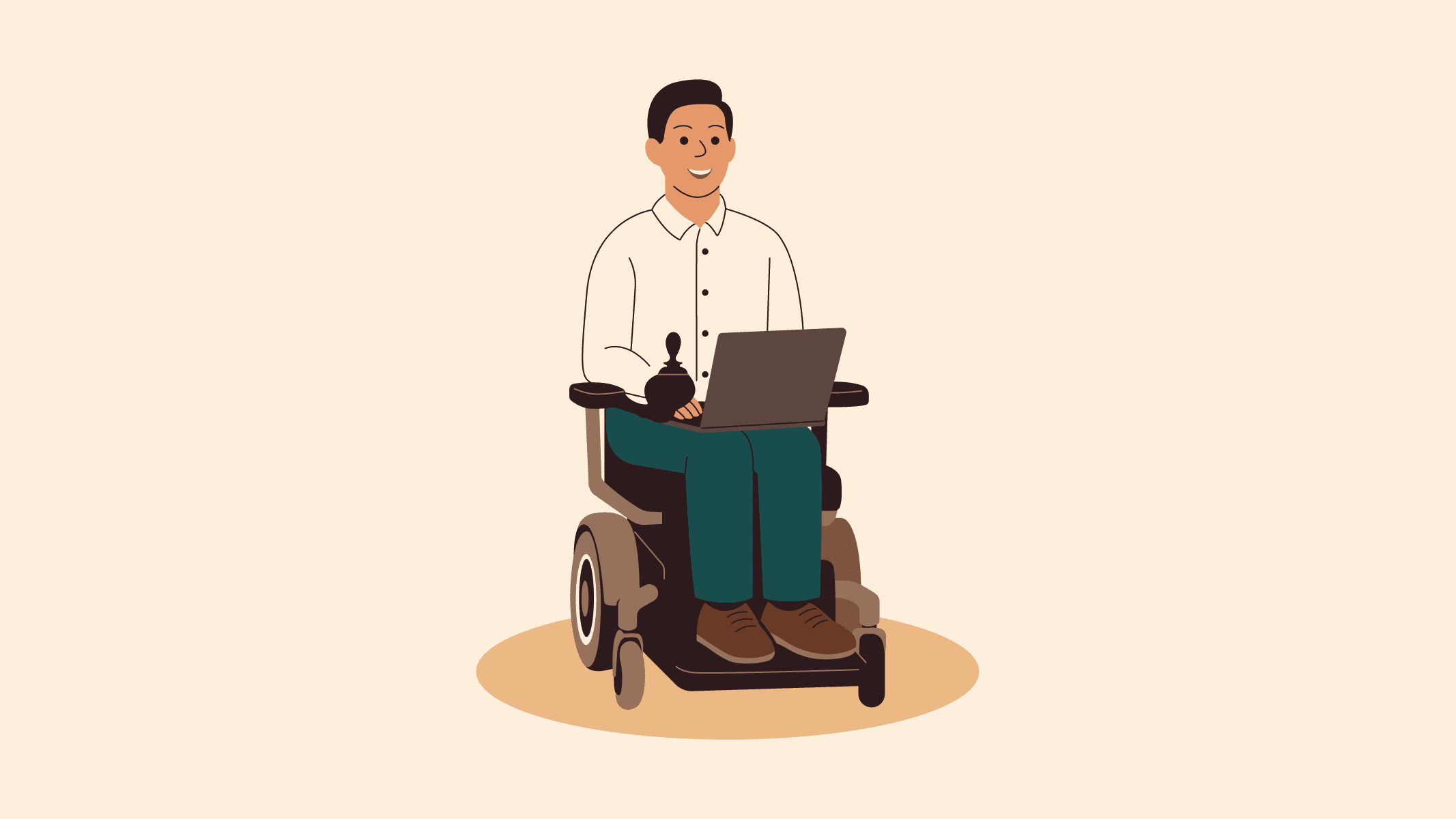
When I was thirteen, I attended a special-needs school. I had little in common with my classmates. An hour and a half of travel time, every day. I wasn’t being challenged. It wasn’t my place.
I dreamed of as “normal” a life as possible: taking part in society, developing my talents at my own pace. I wanted to go to mainstream education.
Having to prove myself, over and over
As easy as that choice was for me, finding a school willing to take me proved just as hard. Schools struggled with my application. I had to take psychological and cognitive tests again and again, just to prove I could handle the level.
It was painful. It felt like I constantly had to prove myself all over again: that I was smart, wheelchair and all. That I could keep up. That I was more than the labels “special needs” and “disabled.”
Being seen as a person
Then I met Arnold. Arnold was the headteacher of a secondary school, and he looked past the pile of tests I had taken. He wasn’t interested in the paper reality. Instead, he focused on who I was: my talents, my ambitions. My disability wasn’t set aside, it was seen as part of my identity. I was seen as a person.
What inclusive education gave me
More than twenty years on, I’m still reaping the benefits of my time in mainstream education. It made the step to the Amsterdam University of Applied Sciences easier, which in turn let me build the career I had dreamed of: at Microsoft, PwC Netherlands, L’Oréal, and Just Eat Takeaway.com.
Inclusive education opens the door to an equal society.
Everyone has talent, not every talent is seen
I believe everyone has talent, but not every talent gets seen and recognised. That’s why I started Kemai Coaching. I coach people with a disability and/or a multicultural background, and guide organisations in embedding diversity, inclusion, and accessibility into their policies.