“Bro, I think it’s really nice that you work out here too. I really admire that!”
Just before I want to start on the treadmill, he taps my shoulder.
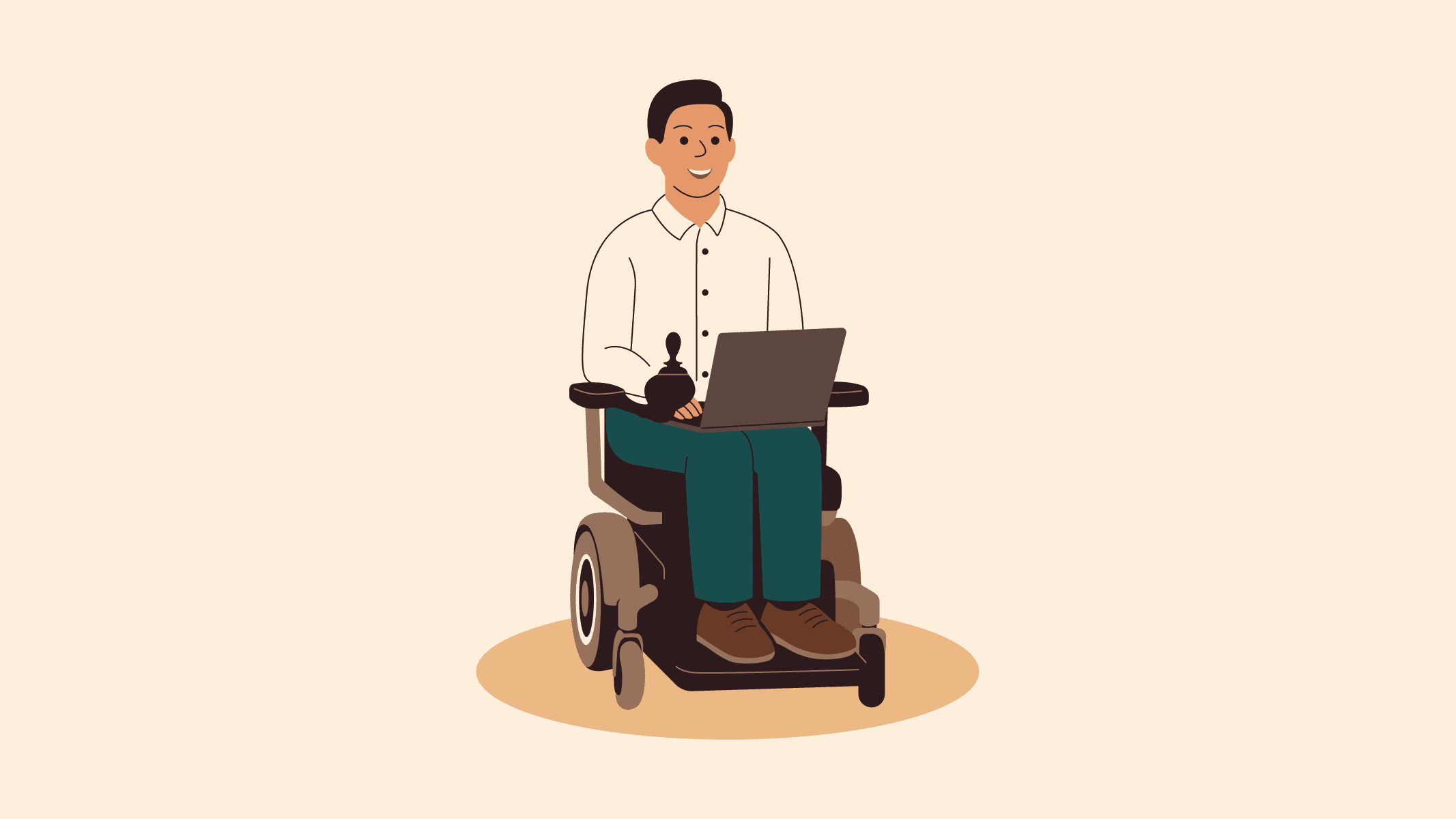
“Yeah, almost ready for summer. And admiration isn’t necessary, you know. Working out with a disability works just fine. Movement is always good, and maybe even more so for me, since I sit a lot,” I say.
“Haha, that’s for sure! Looks like it’s already going in the right direction. And you’re completely right. You have cerebral palsy, right?”
The conversation that followed was about my disability, our training, and our goals.
Everyday things, made special
Working out, going to work, or grocery shopping: for me, these are just everyday things. Others often see them as special. I used to find that a bit strange. It feels like someone saying: “Impressive that you put your shoes on the right feet,” while that’s obvious to you.
Now I see it differently. Not as unwillingness, but as discomfort. Because whoever deviates from the norm doesn’t just stand out, they also hold up a mirror to others. And that’s uncomfortable. Sometimes that leads to clumsy remarks like this one, admiration for something completely ordinary. That has a name: inspiration porn, a term disability activist Stella Young coined in her TED talk. It’s an ableist reflex: not seeing someone with a disability as just a person who happens to work out, but as proof that “it’s possible after all,” purely because that person has a disability. That’s exactly where the room to grow lives.
People with disabilities need to become part of the norm
A situation like this has two sides for me. On one hand, this remark is ableist, a form of inspiration porn, and we need to move away from that, because as long as people with disabilities and what they do are seen as special, they’ll never fully become part of society. I’d rather have someone approach me because I’m muscular, look good, or simply because we’ve run into each other a few times before, the way you’d do with anyone else. On the other hand, I understand it can feel “daunting” for others, or that they don’t quite know what to say or how to react, precisely because people with disabilities are so rarely visible in society.
We need to break the vicious cycle and broaden the norm, and people with disabilities aren’t yet a given part of it. That only works if we talk to each other, and stay aware of what we say and our own biases. That will sometimes be uncomfortable. Embrace the discomfort. Because that’s the only way to grow together and broaden the norm.