You have talent. Ambition. A goal you want to reach. Maybe you have just graduated and are looking for your first job. Or you have been working for a few years and are ready to take the next step in your career. But how do you do that? How do you shape the environment to work for you? Three concrete steps.
1. Write your own story
Everyone in life writes a book. Sometimes you cannot determine what you write but you can always determine how you write about it. The better you know yourself, the better you know what you want and where you are headed. What are your talents? What are you good at? What do you find difficult? What would you like to develop? And what do you need to get there? In short: what makes you, you?
Your disability plays a role in that. Because of it, some things will be harder or may not work out. But because of your disability, you have also developed skills that others do not have, skills that give you an edge. Maybe you are exceptionally good at setting priorities because you have less energy. Or you have built great resilience because things did not always work out the first time. Or you listen better than others because you rely more on your other senses. What the outside world experiences as a limitation is, in fact, a talent.
To help others see that talent, start with how you talk about yourself. You are not your disability. You have a disability.
2. Clearly state what you need to participate without barriers
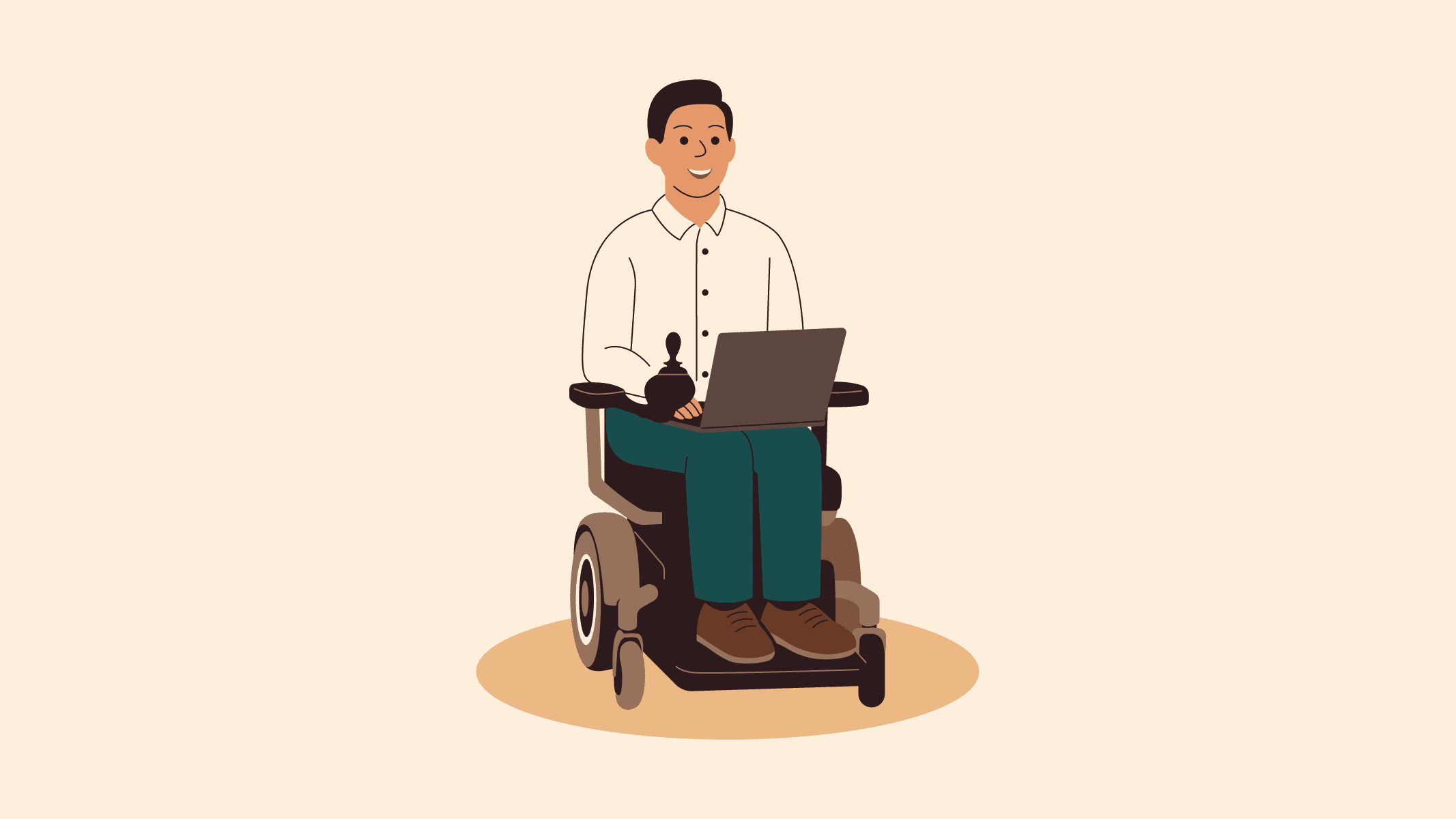
Because you have a disability, you may need adjustments: text-to-speech software, an adapted desk chair, or different working hours. The reality is that many environments are still inaccessible. This is not only something many people with a disability experience daily, it is also what the Netherlands Institute for Human Rights recently concluded. A disability is still often seen through a medical lens: your disability is the problem, and it needs to be fixed.
That framing can make it feel uncomfortable to speak up about what you need. As if you are being difficult. As if you are asking for a favour.
But you are not. You are asking for equal opportunity. Accessibility is a right. Governments and organisations are obliged to remove barriers so that you can participate fully. We need to move towards a social model: the environment creates the disability, so the environment needs to change.
You can help drive that transition. By being clear about what you need. What are your access requirements? What physical and digital adjustments do you need to do your job well? And how can your colleagues best support you?
3. Help others see your perspective
People with a disability are not always visible in society. That means you often fall outside the norm. And people find that uncomfortable. Sometimes they are afraid of saying the wrong thing. Sometimes they are awkward, clumsy, or unsure. That has nothing to do with your personality and everything to do with the stereotypes and assumptions that exist around disability.
Name the discomfort. Push back where needed. Bring the other person into your world: what are your talents, what do you need, and what can you achieve when the environment is right?
Not despite, but because of your disability.