
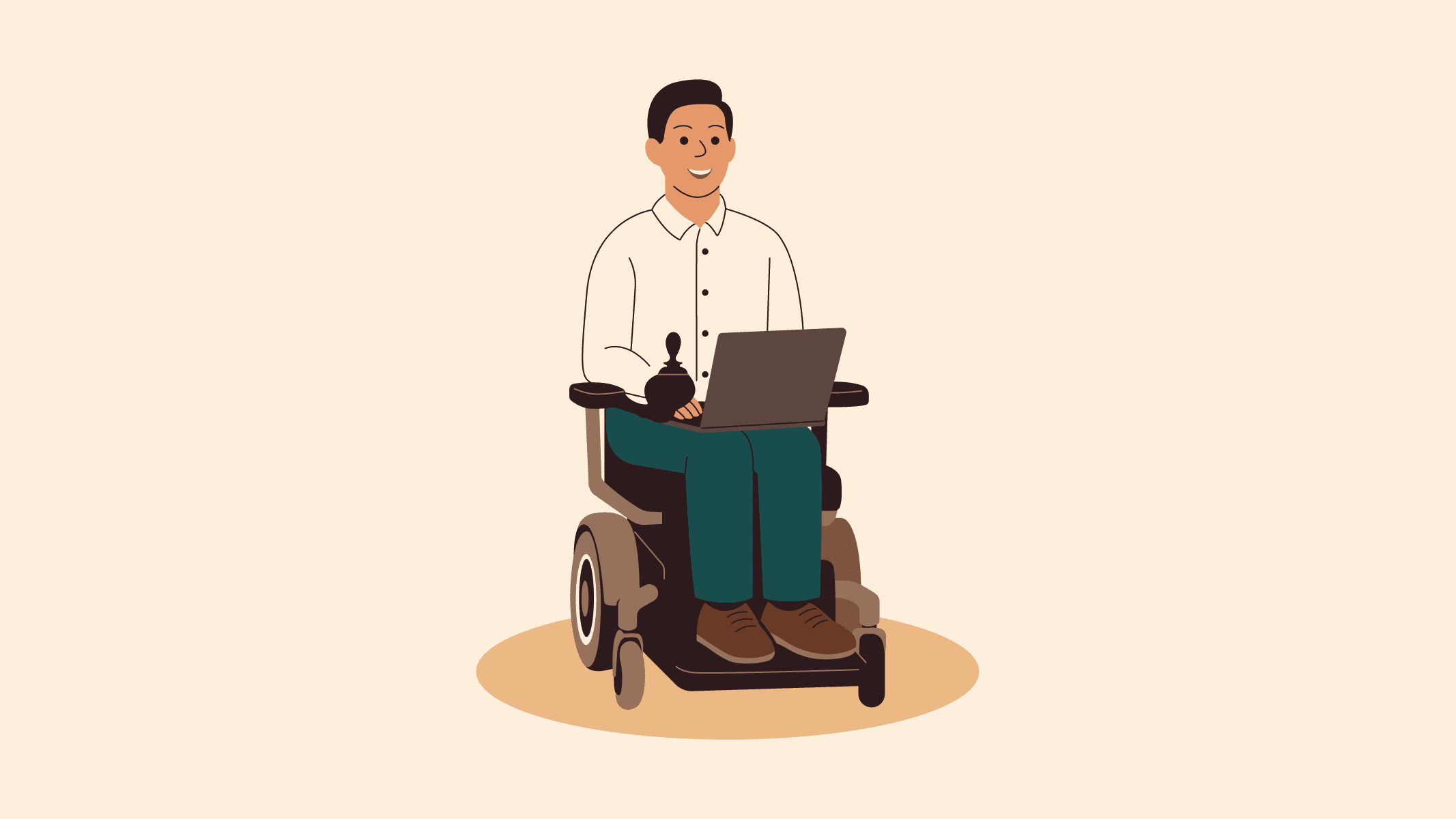
Maybe she felt awkward about our earlier interaction. A few minutes before, I’d asked her to grab the tomato juice from the top shelf. She looked at me, mumbled something, and went back to restocking the toilet paper. Now she was suddenly standing next to me, at the self-checkout.
“Do you need help?” she asked.
I’d stood up from my wheelchair to scan my groceries and turned to face her. “No thanks, but I appreciate the offer.”
“I’ll just stay here with you. You might fall.” I looked at her, a packet of spaghetti in my hand, smiled kindly, and said, “That’s not necessary. Scanning is going just fine on my own, it’s not my first time doing groceries.”
Just as I wanted to get back to scanning my groceries, she waved over a colleague. “Can you help this gentleman?” she asked. The colleague looked at me: “Do you need help, sir?” I told her it wasn’t necessary and that I’d manage fine. She nodded and turned to her colleague: “He says he doesn’t need help,” and walked off.
There we go, I thought, and went back to scanning my groceries. I couldn’t convince her that I could really check out a bottle of tomato juice and a packet of spaghetti on my own. And apparently, neither could her colleague. She stood there, stoic, and I scanned my groceries under her supervision.
People with disabilities sometimes need help. I sometimes need help. And I know exactly when that moment is, what I can do myself and what I can’t. Offering help is nice. Forcing it isn’t, not even when your intent is good.