
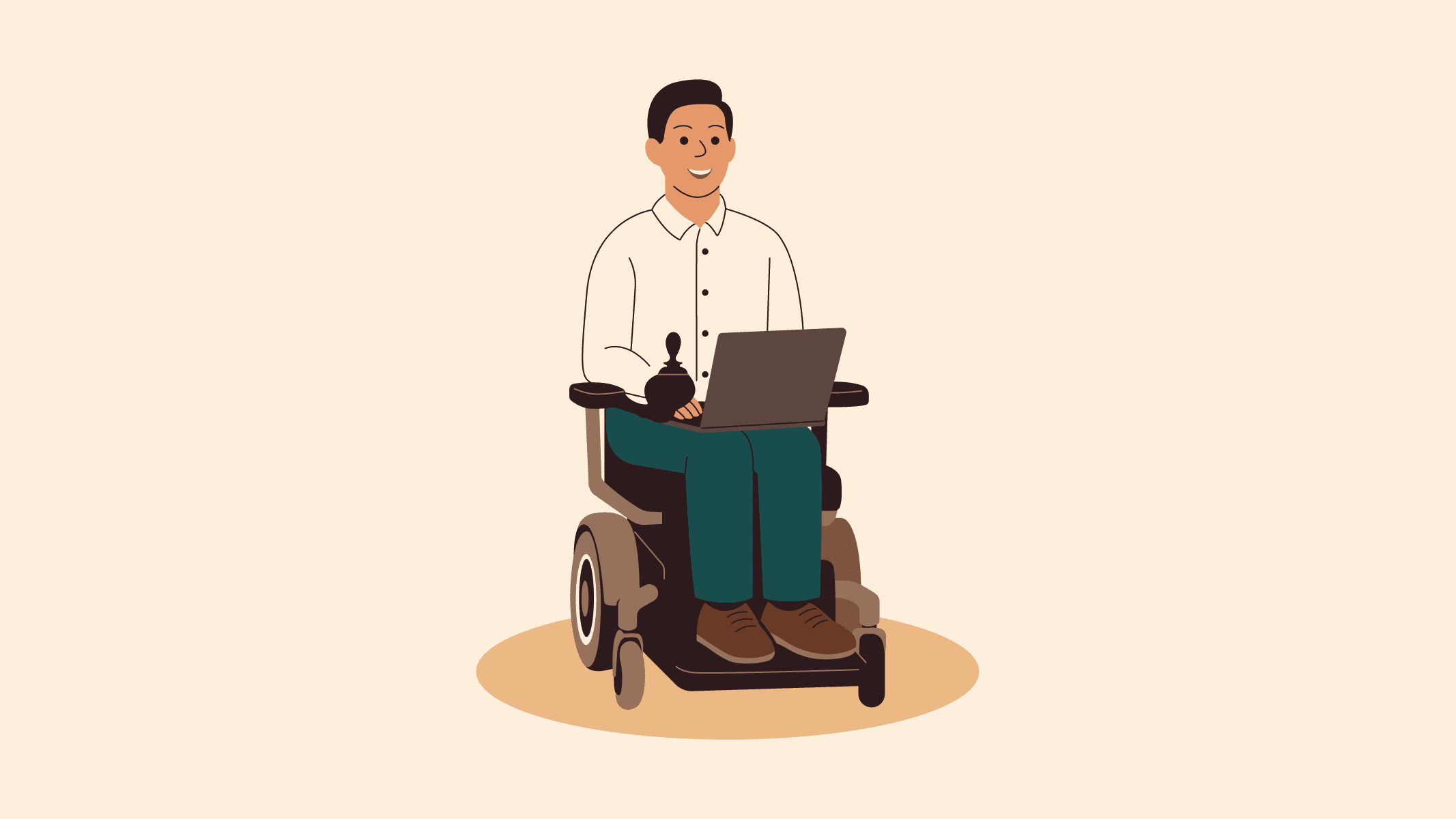
Is a question I ask myself when the taxi I just booked drives right past at the sight of my wheelchair, or when the driver casually says he “doesn’t drive disabled people.” But also when an organisation wants to hire people with disabilities, yet won’t even talk to me because I’m not listed on the official target group register.
Sometimes I’m too disabled, sometimes not disabled enough
For the taxi driver, I’m too disabled. For the organisation, I’m not disabled enough. It would be ironic if it weren’t so painful. I used to freeze in situations like that. Felt uncomfortable. Uncomfortable because I didn’t have a witty comeback. Uncomfortable because I didn’t know what to do with my disability. My mind would race trying to find a solution and neutralise the discomfort as fast as possible. It left me discouraged. Because when exactly am I disabled enough?
I’m not responsible for the discomfort
This changed when I realised: I’m never alone in a situation. There’s always someone else involved. Which means I can never be fully responsible for the discomfort or the situation itself.
But I do have influence. That’s where my power lies. By asking the other person about their reasoning, and inviting them to see things from my perspective. Stating what I need. Standing up for myself. Setting a boundary. Letting someone know something isn’t okay. And, if needed, confronting the other person. The other person is in the position to actually change the situation. My role is to help them get there. That can be uncomfortable. And that’s usually where the most growth happens.
Changing the situation isn’t always up to you. Your response is.